
Transportation Guide for Iceland: How to Get Around the Land of Fire and Ice
Transportation Guide for Iceland: How to Get Around the Land of Fire and Ice
Iceland’s landscapes are vast, varied, and breathtaking—but they’re also spread out. From waterfalls and glaciers to villages and volcanoes, seeing the country’s highlights requires smart planning. This guide explains how to get around Iceland, covering car rentals, public transport, flights, tours, campervans, and practical tips to make your journey safe and efficient.
Introduction: Getting Around Iceland
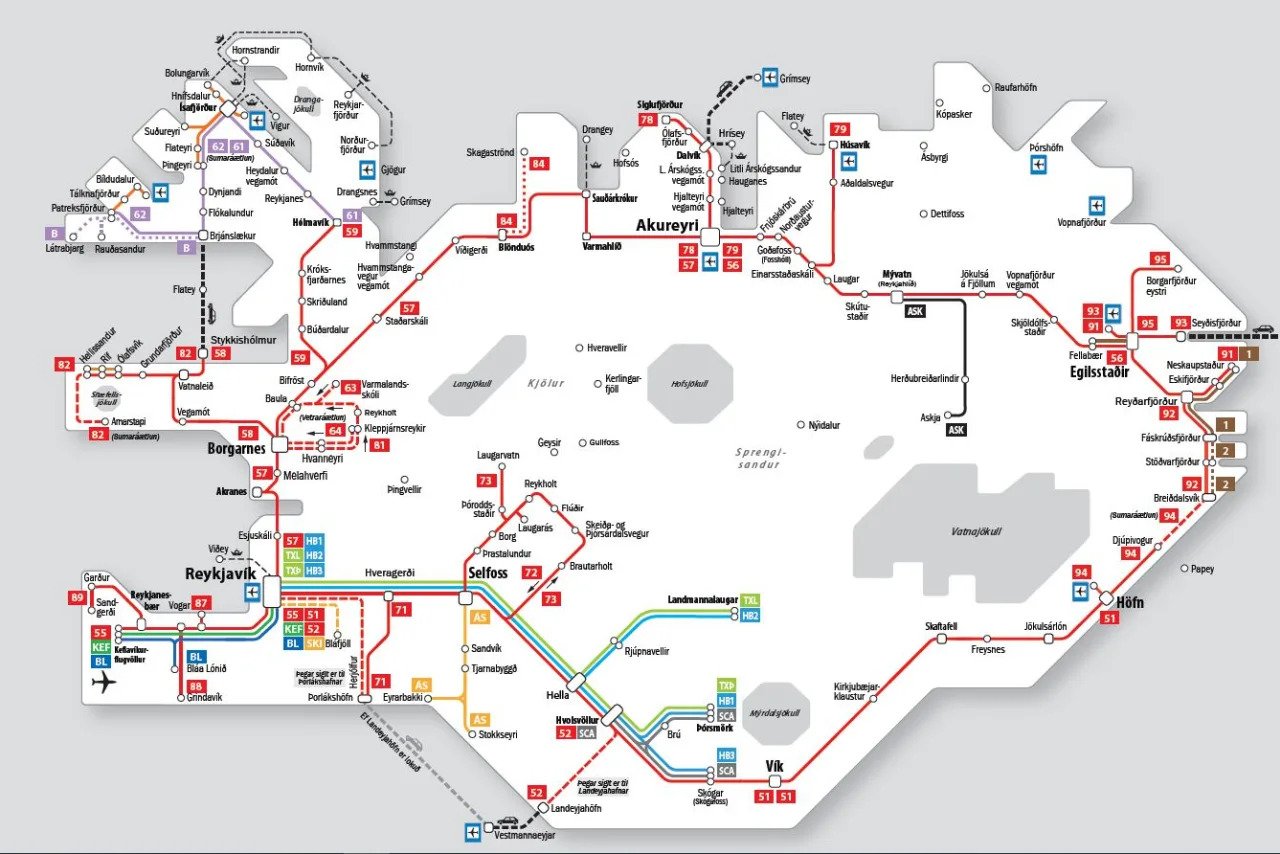
Iceland covers roughly 103,000 square kilometers with a small population, meaning towns are far apart and public transport is limited. Most travelers rely on self-drive routes or guided tours. The Ring Road (Route 1) circles the island, linking major sights. Highlands and remote areas require special vehicles or seasonal access. Understanding your options will help you craft an itinerary that matches your time, budget, and adventure level.
Driving Yourself: Car Rentals & Ring Road
The most flexible way to explore Iceland is by renting a car. Car rentals are available at Keflavík International Airport and in Reykjavík. Choose your vehicle based on your itinerary:
- Standard Cars: Suitable for the Ring Road and paved routes, especially in summer.
- 4x4 Vehicles: Required for highland F-roads, which involve gravel, steep climbs, and river crossings. Only open in summer.
- Insurance: Consider gravel protection, sand and ash coverage, and roadside assistance due to Iceland’s conditions.
The Ring Road (Route 1) takes 7–10 days to complete with stops. Highlights include waterfalls on the south coast, fjords in the east, and volcanic scenery in the north. Drive with caution—one-lane bridges, blind hills, and high winds are common hazards.
Domestic Flights
For travelers short on time, domestic flights connect Reykjavík to regional airports:
- Akureyri: The “Capital of the North” offers quick access to northern sights.
- Egilsstaðir: Gateway to the Eastfjords.
- Ísafjörður: Main town in the Westfjords.
Flights are frequent and cut travel time dramatically, but they cost more than buses. They’re a good option in winter when road conditions are tough or for reaching remote areas without long drives.
Buses & Public Transport
Public transport in Iceland is limited compared to mainland Europe. In Reykjavík, Strætó buses serve the city and nearby towns. Long-distance buses connect major towns and tourist areas, but schedules are infrequent and seasonal.
Bus passes can be economical for travelers without a car, covering the Ring Road route. However, expect longer travel times and less flexibility. Rural stops may be far from attractions, requiring additional transport or walking.
Tours & Day Trips
If you prefer not to drive, Iceland offers an array of guided tours:
- Day Tours: Popular for the Golden Circle, south coast waterfalls, and glacier walks. Depart daily from Reykjavík.
- Multi-Day Tours: Cover larger circuits like the Ring Road or Westfjords with transport and accommodation included.
- Specialty Tours: Northern Lights hunts, super jeep excursions, horseback riding, and lava cave explorations.
Tours provide expert guidance and safety in challenging conditions. They’re ideal in winter or for travelers who want to focus on experiences rather than navigation.
Campervans & Motorhomes
Combining transport and lodging, campervans and motorhomes have become one of the most popular ways to explore Iceland. They allow freedom to roam, cook meals, and stay close to nature. Options range from small vans for couples to larger motorhomes for families.
Keep in mind:
- Camping is allowed only in designated campsites to protect nature.
- Facilities vary—some have showers and kitchens, others are basic.
- Weather can be harsh outside summer; plan routes accordingly.
For travelers seeking independence and cost savings, campervans are a great choice. Pair this with our Accommodation in Iceland guide to plan your overnight stops.
Ferries & Boats
Iceland’s islands and fjords are connected by ferries:
- Westman Islands (Vestmannaeyjar): A short ferry from Landeyjahöfn takes you to Heimaey, famous for puffins and volcanic history.
- Westfjords: Ferries link remote peninsulas, reducing drive times dramatically.
- Grímsey Island: Cross the Arctic Circle via ferry or plane from the north.
Ferries often operate seasonally and are weather-dependent. Booking ahead is recommended, especially in summer or during festivals.
Cycling & Alternative Transport
Adventurous travelers sometimes explore Iceland by bicycle. The Ring Road can be cycled in summer, but conditions are challenging—strong winds, variable weather, and long distances between services. E-bikes and bike tours are emerging for shorter routes or guided experiences.
Other alternatives include hitchhiking (still relatively safe but less common) or combining hiking with buses to reach trailheads. However, nothing matches the flexibility of having your own wheels.
Practical Tips for Transportation
- Fuel: Gas stations are sparse in remote areas. Fill up when you can.
- Navigation: GPS and offline maps are essential. Cell coverage is good on the Ring Road but limited in highlands.
- Weather: Check vedur.is for forecasts and road.is for conditions daily.
- Driving Etiquette: Use pull-outs for photo stops; headlights on at all times; respect speed limits.
- Seasonal Planning: Some routes and tours run only in summer. Winter travel requires extra time and caution.
For general preparation tips, see our Travel Tips for Iceland guide and plan accordingly.
Conclusion
Iceland’s beauty stretches far beyond Reykjavík, and getting around is part of the adventure. Whether you rent a car for the Ring Road, hop on domestic flights to save time, join guided tours for convenience, or roam in a campervan, the right transport choice helps you see more and stress less. With preparation, respect for nature, and a flexible plan, exploring Iceland’s landscapes becomes as rewarding as the destinations themselves.
Continue planning your journey with our guides to Travel Tips for Iceland, Adventure & Activities in Iceland, and Accommodation in Iceland.